Easy sewing: pretty at first, but will it really hold up?
Hi, this is Sophie.
Yes, an easy sewing project can still look lovely and be durable if you choose a suitable fabric, prepare it before sewing, and take care with your finishing.
A creation that stands the test of time depends on more than how it looks on the first day. Strong seams, durable fabrics, and how well it holds up in the wash make all the difference, even for a small home sewing project.
What to do now
- Choose a stable woven cotton for your first project, rather than jersey or silk.
- Wash, dry, and iron the fabric before cutting it to minimize distortion after washing.
- Check the seam allowances specified in the pattern; if none are given, generally allow 1 cm.
- Pin the pieces carefully to stop them from slipping and the seams from shifting.
- Match the needle to the fabric and use good-quality thread, such as an all-purpose polyester thread.
These simple steps help you achieve a better quality of finish without making the work more complicated. To choose an accessible pattern, you can check out these ways to choose a pattern without stress and discover projects suitable for beginners.
Why an easy sewing project may not be durable
A project can look successful when it comes off the machine, then lose its shape after a few uses. Most often, the problem comes from fabric that wasn’t prepared properly, an unsuitable needle, or seams that are too close to the edge.
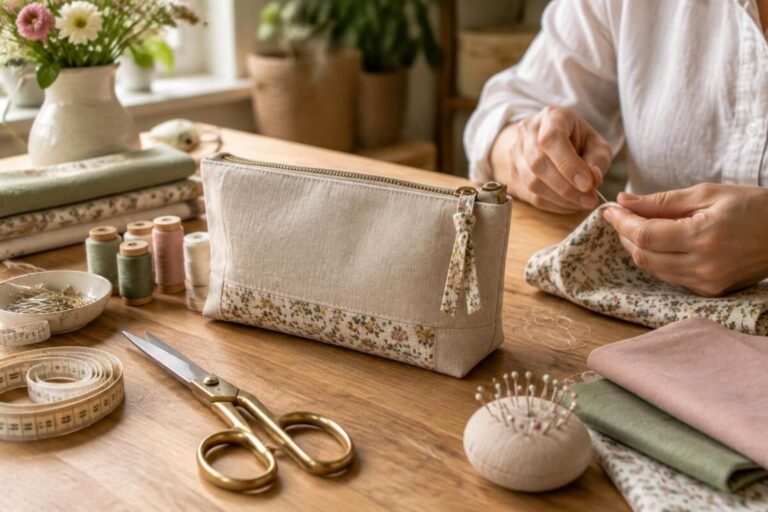
Imagine Léa, who is making a cotton pouch for her supplies. If she forgets to wash the fabric, it may shrink the first time it goes in the machine and pull on the seams; prewashing and consistent seam allowances significantly reduce this risk.
Fabric and washing affect how well a garment holds up
Double gauze, jersey, and silk are eye-catching, but they move more easily under the presser foot. For learning, classic printed cotton is more stable to cut, pin, and sew.
Garment durability also depends on how you care for your clothes. Follow the fabric’s care instructions, avoid excessive temperatures, and test how it holds up in the wash on a fabric scrap if the textile is delicate.
| Item | Common risk | Helpful habit |
|---|---|---|
| Unprewashed fabric | Shrinking or distortion | Wash and dry before cutting |
| Forgotten seam allowance | Finished piece is too small | Follow the pattern or allow about 1 cm |
| Unpinned pieces | Misaligned or wavy seam | Pin before stitching |
| Unsuitable needle | Uneven stitches or damaged fabric | Choose a needle to suit the fabric |
The right settings for stronger seams
Strong seams rely on even stitches and correctly adjusted tension. Before sewing your project, test on a scrap of the same fabric; a few centimeters are enough to spot loops, skipped stitches, or thread that is too tight.
For most cottons, a universal needle in good condition will work. For fine or delicate fabric, a Microtex needle can help prevent snags; replace a blunt needle as soon as the stitches become uneven.
Three steps to prepare for a durable result
- Prepare the fabric: wash, dry, and iron it before transferring the pattern. Also check the fabric grain and the specified seam allowances.
- Assemble without rushing: pin the pieces, test the stitch on a scrap, then sew at a steady speed.
- Reinforce and check: secure the beginning and end of each seam, trim the threads, then check the areas that will be under strain before the first wash.
This routine works for many simple sewing projects, from a pencil case to a lightweight bag. It turns sewing advice into easy-to-repeat steps and saves you from having to unpick everything later.
Beginner sewing mistakes that weaken a project
It’s tempting to rush ahead without pinning, especially when the pieces seem easy to put together. However, lightweight fabric can slip by a few millimeters, which is enough to create a crooked seam or misaligned piece.
Another pitfall: forgetting the seam allowances. If they aren’t included in the pattern and aren’t added to the fabric, the finished item will be smaller than expected. If you’re new to sewing, it’s best to check this detail before taking out the scissors.
Easy sewing doesn’t mean you have to get everything right the first time. Testing on a scrap, calmly redoing a seam, and choosing a suitable fabric are more reliable ways to improve than starting out with a difficult fabric.
What fabric should I choose to start sewing?
Classic woven cotton is a good choice: it is easier to cut, pin, and sew than jersey, silk, or double gauze.
Should I wash the fabric before sewing?
Yes, it’s best to. Washing and drying the fabric before cutting helps minimize the risk of shrinkage or distortion after sewing.
What seam allowance should I use?
Follow the pattern instructions first and foremost. If no seam allowance is specified, an allowance of about 1 cm is often used for simple projects.
How can I make seams stronger?
Use a suitable needle and thread, test on a scrap, sew evenly, and secure the ends of the seams.
Thanks for reading! Feel free to share your thoughts in the comments. — Sophie