Gift sewing: should you sew something useful or just make something pretty?
Hi, it’s Sophie. The best handmade sewing gift is both beautiful and suited to the person receiving it: useful doesn’t have to mean plain. An item that gets used often is a lasting reminder of the thought behind it. But a decorative creation can also hit the mark if it matches the person’s tastes. So the right choice starts with their habits, not a one-size-fits-all rule.
Handmade sewing gifts: good practices to follow
- Think about the person: what items do they use every day?
- Choose a project suited to your skill level and the time you have available.
- Choose an easy-care fabric that’s suited to the item’s purpose.
- Add a personal touch with a color, embroidery, or a small detail.
- Check the finishing: it makes all the difference in a handmade gift.
A tote bag is a good idea for someone who often carries their things; a pretty cushion is a better fit for someone who loves textile decor. To narrow down your choice, explore these useful gift projects for beginners and these tips for avoiding a rushed look in a polished handmade sewing gift.
Sew something useful or make something beautiful: two ways to delight
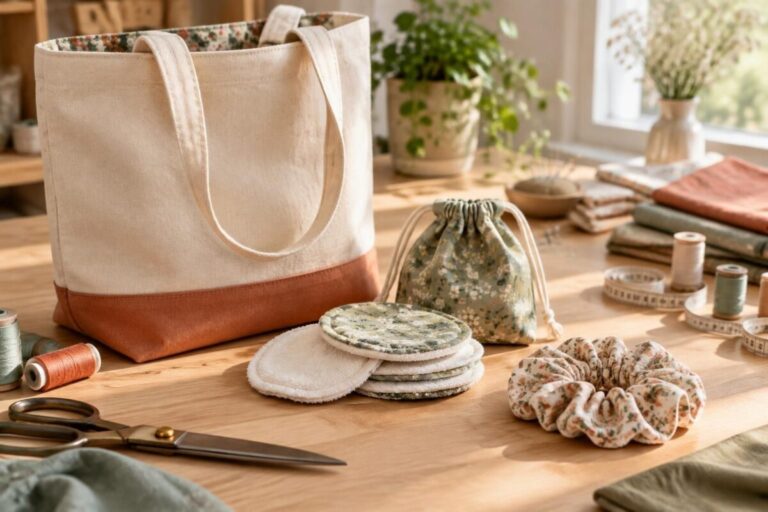
Practical sewing meets a specific need: storing, carrying, protecting, or replacing a disposable item. Reusable wipes, drawstring bags, produce bags, and pouches are among the sewn accessories that easily become part of everyday routines.
Decorative sewing, on the other hand, transforms a space or adds a personal touch. A cushion cover, table napkins, or a fabric book sleeve can be much appreciated, even if they don’t meet an urgent need. The best gift often combines the two: a practical item made from a fabric the recipient will love.
A practical example to help you choose a sewing project
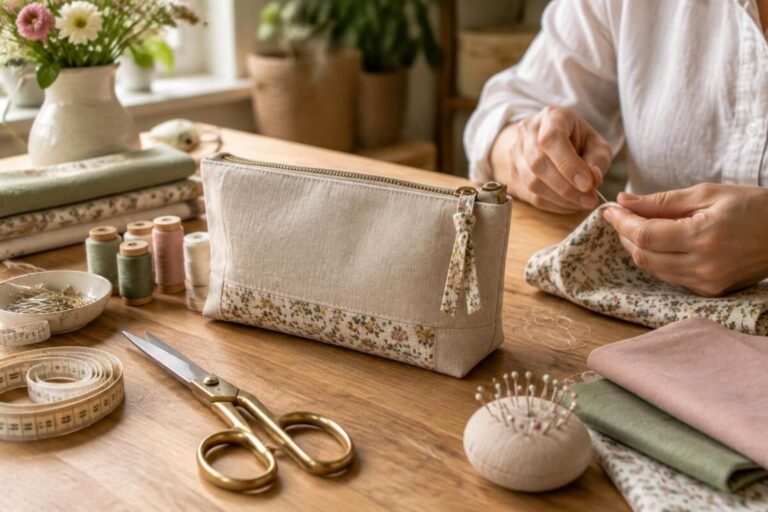
Camille wants to give something to a friend who reads on public transit and always keeps her bag in a mess. A padded book sleeve would look lovely, but a storage pouch could also help her every day. By combining both uses in a small lined case, she creates a personalized gift that protects her book and holds her earbuds.
Before cutting the fabric, one question is often enough: will the person want to use it or display it? If the answer is yes to either option, the project already makes sense.
Handmade sewing gift ideas based on use and time available
The times below are estimates for a simple project. They vary depending on your experience, the pattern you choose, and the finishing you want.
| Project | Use | Skill level | Estimated time | Recommended fabric |
|---|---|---|---|---|
| Set of reusable wipes | For toiletry use, depending on the fabric | Beginner | About 1 hr 30 min for ten | Soft terry cloth and cotton |
| Personalized tote bag | Shopping and outings | Beginner | 30 to 45 min | Canvas, canvas fabric, or denim |
| Drawstring bag | Storage or gift wrapping | Beginner | 20 to 30 min | Cotton or linen |
| Lined pouch | Travel, makeup, or sewing | Intermediate | About 1 hr | Heavyweight cotton or laminated cotton |
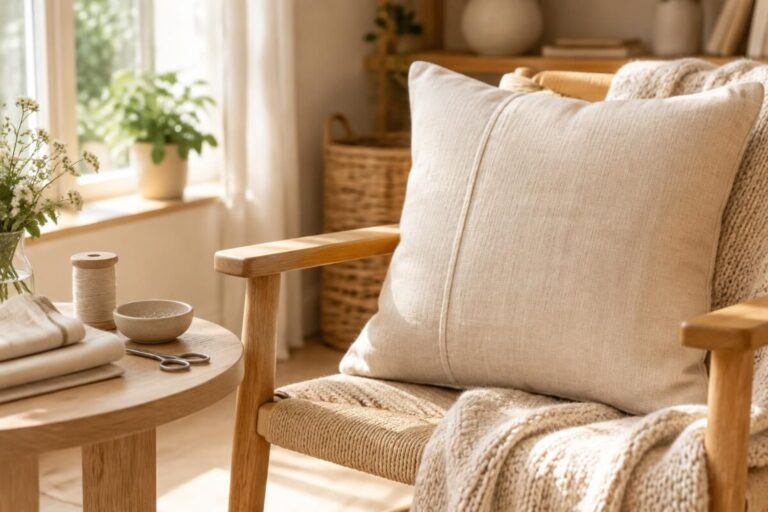
| Envelope cushion cover | Home decor | Beginner | About 30 min | Linen or upholstery cotton |
For a first handmade gift, reusable wipes or a drawstring bag are reassuring projects: they require little fabric and small imperfections won’t matter much. A zippered pouch looks more polished, but requires greater precision. In any case, a well-chosen fabric scrap can be enough to create everyday items that are both durable and personal.
Fabric and finishing make all the difference to a gift
A simple project can become remarkable when you choose the right material. For a new baby gift, cotton double gauze is soft and lightweight; for a frequently used bag, sturdy canvas or recycled denim will hold up better. Repurposed fabrics also give a creation a story: an old shirt can become a pouch, while a pair of jeans still in good condition can provide panels for a small pouch, after checking its thickness and condition.
However, don’t choose a fabric just because it looks pretty. A delicate material for a shopping bag, or one that’s difficult to wash for reusable wipes, could make the gift less practical. The fabric should suit the project before it decorates it.
Measurements, a sewing test, and care: checks to make before gifting
Measure the item to be stored and add ease as well as the seam allowances specified by the pattern: cutting dimensions are not the same as the finished item’s dimensions. Test the needle, thread, and settings on a scrap with the same number of layers, without pulling on the fabric. For a washable item, prepare the fabric according to its care instructions and test-wash it before gifting to check for color bleeding or changes in size. Then provide care instructions that are suitable for all the components, including the lining, thread, and embellishments.
Open and close the pouch several times, inspect the corners and backstitching, then check that it can be filled without forcing it. For a bag, pay particular attention to the handles and how they are attached; don’t state a maximum load you haven’t tested. A drawstring bag is for storage, not a toy for a young child.
Match the fabric to the person’s style
For a pouch or tote bag they’ll carry outdoors, take a look at the colors and accessories they already use. These tips for matching accessories to an outfit can help you choose a subtle print or an accent color. Then keep the design simple: a well-chosen fabric personalizes the gift without adding a closure or embroidery you’re not confident making.
A three-step method for making your decision
- Identify a real use. Notice what the person is missing or what they use often: a bag, a pouch, napkins, or a storage accessory.
- Match the project to your time and skill level. If you only have an evening, choose a drawstring bag or reusable wipes; if you’re already comfortable with zippers, try a lined pouch.
- Personalize it without making it complicated. A favorite color, a small embroidery detail, or repurposed fabric is enough to make the item unique.
This approach helps you avoid sewing a gift that will end up at the back of a drawer. It also leaves room for enjoyment: a successful project is one you enjoyed making as much as the recipient will enjoy using it.
When should you choose a decorative gift over a practical item?
Textile decor is a lovely option when the person enjoys decorating their home or already has the accessories they need. A cushion cover in their favorite colors, a placemat, or a carefully coordinated book sleeve can make a thoughtful gift.
If you’re not sure what they like, stick with a practical, understated design: a drawstring bag, a pouch, or a tote bag in a neutral shade. If you know their style well, be bolder with patterns and details. Something beautiful is a pleasure to receive when it feels like the person it’s for.
Frequently asked questions about handmade sewing gifts
What sewing project should a beginner choose as a gift?
Reusable wipes, a drawstring bag, and a tote bag are good choices. They involve simple seams and make useful gifts without requiring complex techniques.
How can you make a handmade sewing gift more personal?
Choose a color or pattern the recipient likes, add a small embroidery detail, or use repurposed fabric with a story. A subtle personal touch is often enough to make the item unique.
Should you choose a practical or decorative gift?
It all depends on the person’s habits. If they like functional items, sew an everyday accessory; if they take care with their home decor, choose a textile decor creation instead.
What fabric should you use for a practical handmade sewing gift?
The fabric depends on the intended use and the pattern: stable woven cotton for beginners, canvas for some bags if your machine can handle the layers, and soft, washable fabric for a reusable wipe. Thick fabric doesn’t guarantee heat protection; don’t treat it as a tested and approved trivet.
Thanks for reading! If this topic speaks to you, I’d love it if you left me a comment at the bottom of the article. — Sophie